Cultivating Peace and Wisdom
The Path of Practice
The Noble Eightfold Path
A Gradual Path of Transformation
The practice of the Dhamma is a gradual path of cultivation, a journey of transformation guided by the Noble Eightfold Path. This path is not a sequence of steps, but a set of eight interconnected factors that, when developed together, lead to the cessation of suffering and the realisation of Nibbāna. At our monastery, the practice is structured around the threefold training.
The Threefold Training
Sīla, Samādhi, Paññā

Sīla — Ethical Conduct
The foundation of the path is ethical conduct — the cultivation of wholesome actions of body and speech. The Five Precepts: Refraining from harming living beings, from taking what is not given, from sexual misconduct, from false speech, and from intoxicants that cloud the mind.

Samādhi — Concentration
With the foundation of virtue in place, the practitioner develops concentration through meditation. The primary method taught at our monastery is Ānāpānasati — mindfulness of breathing. Fruits: Clarity of mind, inner peace, mental stability.

Paññā — Wisdom
The culmination of the training is the development of direct insight into the three characteristics of existence: impermanence (anicca), suffering (dukkha), and non-self (anattā). The Goal: Realisation of Nibbāna.
An Integrated Approach
Practice in Every Moment
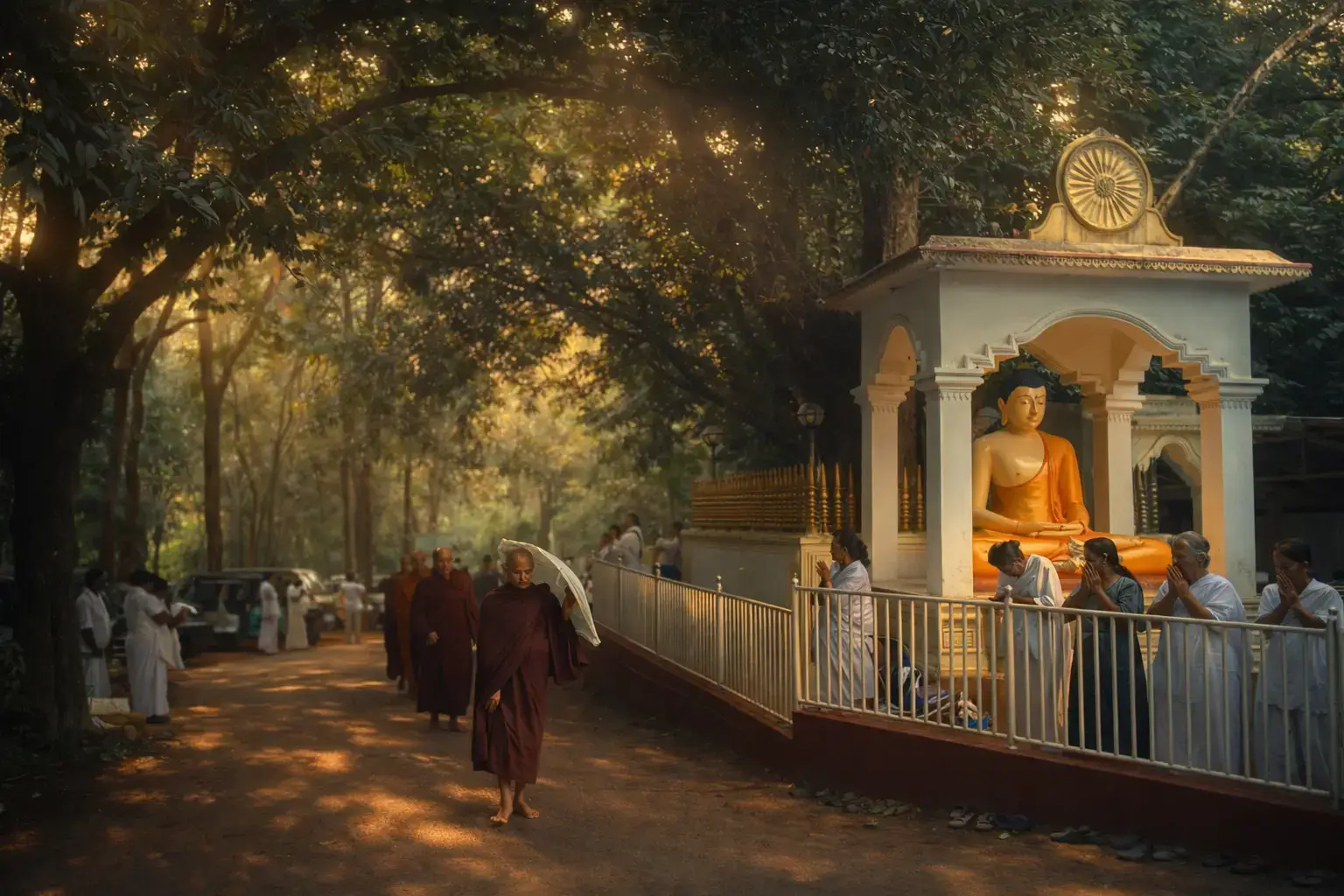
At Galduwa, the threefold training is not practised in isolation. Sīla, Samādhi, and Paññā are cultivated together as a unified whole, woven into every aspect of daily life — from the morning alms round to the evening meditation.
Walking meditation is given equal importance to sitting practice. As the practitioner walks slowly and mindfully along a designated path, the same qualities of awareness, concentration, and insight are cultivated.
- Ānāpānasati — mindfulness of breathing
- Walking meditation (caṅkama)
- Mindfulness in daily activities
- Study of the Pali Canon and suttas
Ānāpānasati
Mindfulness of Breathing
The primary meditation method taught at Galduwa is Ānāpānasati — mindfulness of breathing. This is the very method the Buddha himself used to attain enlightenment and the one he most frequently recommended to his disciples.
The practice begins with establishing awareness at the nostrils, observing the natural rhythm of the breath without attempting to control it. Gradually, the mind settles, concentration deepens, and the meditator enters into progressively subtler states of stillness.
From this foundation of calm, the practitioner is able to develop vipassanā — insight meditation — seeing directly into the impermanent, unsatisfactory, and selfless nature of all conditioned phenomena.
Deepen Your Practice
Join a Meditation Retreat
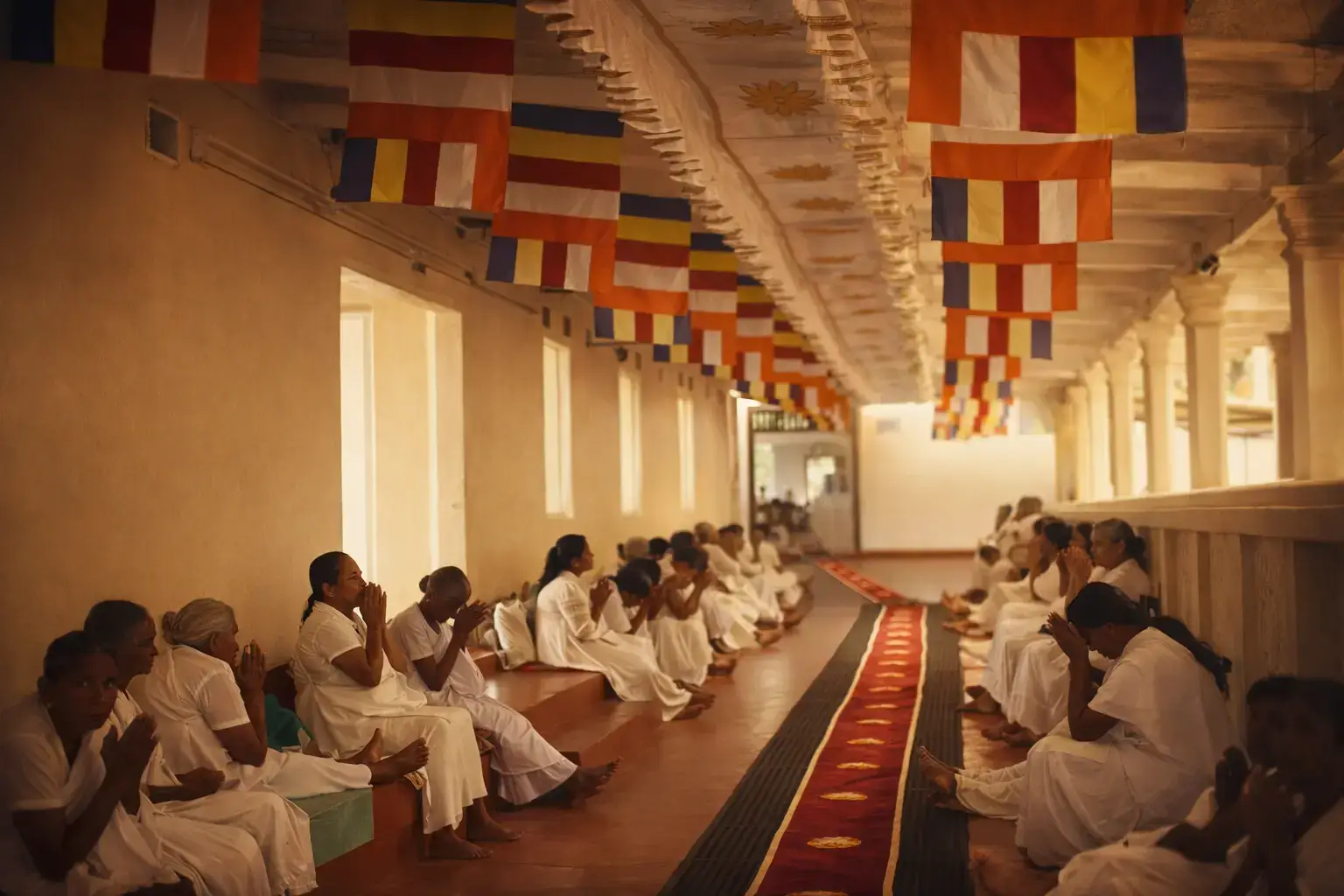
Experience intensive practice in the peaceful environment of our forest monastery. Retreats are offered periodically for both beginners and experienced practitioners.